
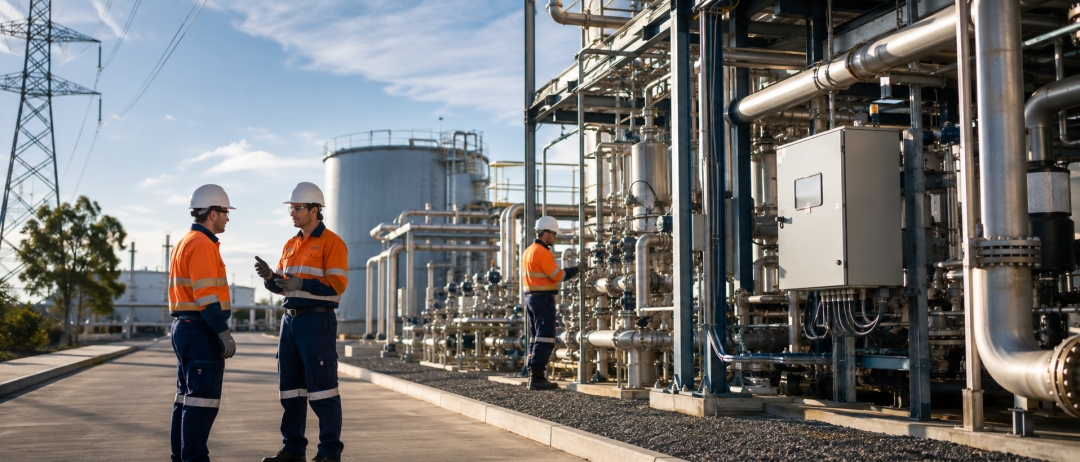
Australia’s industrial sector is moving through a practical reset. Across manufacturing, energy, resources, logistics and large-scale infrastructure, operators are under pressure to improve productivity without compromising safety, reliability or compliance. The strongest projects are no longer defined by equipment alone. They depend on specialist knowledge, disciplined planning and people who understand how complex systems behave in real working environments.
Skills That Match Modern Industrial Demands
Industrial facilities have become more connected, automated and data-driven, yet technology does not remove the need for sound judgement. It raises the standard. Teams must understand how instruments, controls, electrical systems and mechanical processes interact, especially when a minor fault can interrupt production or create a serious site risk.
That reality has increased the value of targeted workforce development. Well-designed instrumentation courses can help technicians and operators build practical knowledge in measurement, calibration, process control and fault finding, giving them a clearer view of what is happening across a plant. The aim is not training for training’s sake. It is better decisions on the floor, where timing, accuracy and confidence matter.
Safety Starts Before Work Begins
Safe operations begin long before a worker opens a panel, enters a restricted area or starts a maintenance task. They begin with design reviews, accurate documentation, suitable equipment selection and clear responsibilities. When those foundations are weak, even experienced teams can lose time trying to confirm what should already be known.
Specialists bring structure to that process. They identify hazards early, challenge unclear assumptions and make sure procedures reflect the actual site, not a generic template. That level of preparation may not look dramatic, but it prevents confusion. Often, that is where the biggest gains sit.
Efficiency Without Cutting Corners
Industrial efficiency is sometimes treated as a race to reduce labour, shorten shutdowns or push equipment harder. That approach can backfire. Genuine efficiency comes from reducing repeat faults, improving maintainability and completing work correctly the first time.
Maintenance planning deserves equal attention. Clear scopes, realistic schedules and accessible records help crews avoid rushed decisions when equipment is offline.
Reliable commercial electrical services also play a central role in that outcome, particularly where facilities require upgrades, testing, fault diagnosis, switchboard work or ongoing maintenance. Experienced providers can coordinate tasks around operational needs, manage compliance requirements and reduce avoidable disruption. Four hours saved during a planned shutdown can matter, but only when the work remains safe and dependable after production resumes.
Specialist Input Improves Project Decisions
The best industrial projects invite technical expertise into the conversation early. Waiting until installation or commissioning can leave teams dealing with design clashes, access problems, unsuitable components and documentation gaps. Fixing those issues late usually costs more and takes longer.
Early specialist input helps project teams test ideas against site conditions. Can equipment be isolated safely? Is there enough room for maintenance? Will future technicians understand the labelling? Does the proposed system suit the environment? These are simple questions. Missing them is expensive.
A More Resilient Industrial Future
Australia’s industrial development will continue to rely on major investment, but capital alone will not create resilient operations. Capability will. Businesses that prioritise skilled people, practical training, sound engineering and accountable service partners will be better placed to manage growth, ageing assets and changing regulatory expectations.
The direction is clear. Safer and more efficient operations come from treating expertise as essential infrastructure, not an optional extra. When industrial teams combine strong systems with experienced judgement, projects run more smoothly, assets perform more reliably and workers return home safely. That is the standard worth building around.
Media Contact
Company Name: News Today
Contact Person: Oliver Taylor
Email: Send Email
Country: Australia
Website: https://newstoday.au/